 Study Program in Journalism
Enhance Your Chances for a Career or Business in the Media.
This school has been heavily involved in both the Australian and international media for decades; both as teachers and working with publishers as writers and illustrators. Our principal and staff have been contracted to write hundreds of publications; and the school itself is a publisher of both printed books and eBooks.
This course may lead to many different types of jobs; including:
- Publishing Business Owner
- Journalist, Author, Writer
- Graphic Designer, Layout Artist or Illustrator
- Publishing Assistant or Manager
- Web Developer
- A Marketing Manager for a publisher poor distributor
- A Production Manager
Many university journalism graduates end up never being able to secure a successful career in publishing. There are many reasons for this.
You are better to investigate and understand these issues BEFORE STARTING a course; rather than being surprised after completing a qualification.
ACS tutors are well published and successful professionals with current industry experience. Study here for an education with a strong dose of both reality and opportunity.
Starting a publishing business is much easier than in the past; if you know what you are doing; but getting a long term secure position with a big publisher is harder: largely because the industry has changed. A career is just as feasible as ever; but the sort of career may be a little different to what it once was -talk to our staff, who themselves include professional writers and publishers.
Course Structure and Content
- 21 modules must be studied
- Each involves 100 hours (approx.) of study
- 2100hours
- up to 3 years full time
- up to 6 or 7 years part time
- All set assignments must be completed satisfactorily. If they are not, you are always given opportunity to resubmit.
- 19 sit down, closed book exams must be completed as well. These can be sat anywhere in the world. Additional fees apply for the exams.
Core Modules
These modules provide foundation knowledge for the 2100 hour study program in Publishing And Journalism.
Elective Modules
In addition to the core modules, students study any five of the following modules.
- Children's Writing BWR104
- Dramatic Writing BWR110
- E Commerce BIT100
- Html (Writing a Website) VIT102
- Office Practices VBS102
- Workshop I BGN103
- Digital Photography BPH202
- Journalism Practice I BWR203
- Photoshop - Beginner To Medium Level VIT202
- Research Project II BGN201
- Research Project III BGN202
- Workshop II BGN203
- Editing II BWR302
- Publishing III BWR303
Contents of Selected Modules
Some of the modules (only some) are outlined briefly below:
Freelance Writing
This has ten lessons:
1. Introduction to freelancing
2. Basic writing skills
3. The publishing world
4. Manuscripts
5. Planning what you write
6. Newspaper writing
7. Magazine writing
8. Writing books
9. Writing advertising
10. Special project
Advanced Freelance Writing
The has 8 lessons:
- Introduction.
- Writing a Regular Column
- Educational Writing
- Scientific Writing
- Writing a Biographical Story
- Writing a News Article
- Fiction Writing
- Other Writing
 Creative Writing
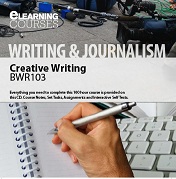
This has 10 lessons:
1. Introduction
2. Basic Writing Skills
3. Being Concise and Clear
4. Planning what you write
5. Fiction
6. Non Fiction
7. Newspaper Writing
8. Magazine Writing
9. Writing Books
10. Special Project
Children’s Writing
This has 10 lessons:
- Introduction
- Overview of Children’s Writing
- Conceptualisation
- Children’s Writing for Periodicals
- Short Stories
- Non-Fiction
- Fiction
- Picture Books and Story Books
- Editing your work
- Project
Technical Writing
There are eight lessons in this module as follows:
1. Scope and Nature of Technical Writing
2. Presentation
3. Matching style and content to the audience
4. Planning: Developing a Logical Structure or Format
5. Collaborative Writing
6. Writing Technical Periodicals
7. Writing Manuals and Procedures
8. Writing Project Proposals
9. Writing Project Reports.
Fiction Writing
There are eight lessons in this module as follows:
1. Scope & Nature of Fiction
2. Components of a Story – beginning, middle and end
3. Technique…The Creative Process – conception, developing a plot, Writing a Draft, Editing and rewriting; Method Writing
4. Conception and Research
5. Drama
6. Fantasy
7. The Short Story
8. The Novel
Publishing l
1. The content of each of the ten lessons is as outlined below:
2. The Publishing World Nature & scope of publishing, types of publishers, how books are published, market research
3. Publishing Procedures & Techniques Colour or black & white; film or digital imaging, types of printing, alternative ways of doing layout (eg. typesetting, paste up, electronic layout with Adobe products or MS publisher), comparing types of digital graphic files, printing costs, etc.
4. Desktop Publishing Word Processing, Alternative publishing methods: Printing on a Computer Printer; Supplying a "Master" to a commercial printer, or publishing electronically (eg. Internet or CD)
5. Desktop Publishing Software options, use of colour, black and white, use of graphics, putting it together, etc.
6. Illustration: Graphics Line illustrations, cartoons, photos etc. Freehand work, Computer graphics, etc.
7. Illustration: Photography Photographic Equipment & Materials; Composition; Development of Photographic Style Portraiture, Posing for Photographs, Planning a Photo Session, Studio Photography, Fault Finding, etc.
8. Researching Types of Research (Exploratory, Experimental etc), Primary & Secondary Data sources, Planning a survey, Conducting an interview.
9. Marketing in Publishing Understanding marketing & publicity –what makes a publication succeed or fail, launches, press releases, etc.
10. Publishing: Ethics & The Law Public attitudes, accuracy of writing, bias, monopolies, media ownership concerns, etc.
11. Publishing Project Here you actually publish something.
Publishing ll
There are eight lessons in this module as follows:
1. The Publishing Process
2. Law and the Media
3. Ethics & Morality
4. Production Systems I –from writing to printing
5. Production Systems II
6. Layout for Print Media
7. Media Advertising
8. Marketing and Distribution Systems –Print & Electronic Media
Publishing lll
There are seven lessons as follows:
1. What to publish? – Deciding what and how to publish: market analysis, sponsorship, advertising, reader demand, industry support, distribution channels
2. Planning a New Publication
3. Costing a New Publication
4. Resource Management – Managing physical, human and intellectual resources
5. Risk Management – Legal considerations, insurance, staff wellbeing
6. Managing Writers
7. Managing Production & Distribution – Cost, timing, quality control, accuracy
Practical Journalism I
This module gives you hands-on experience in writing for our online student magazine. You work with a mentor (member of our academic staff) who will oversee your role as writer for an online publication, for one edition of that publication.
With so many would-be writers around, publishers can afford to be very choosy. Most will only accept work from writers who have already been published, but getting that first work published can be a daunting and difficult task. Many very good writers just never get published at all.
This module provides our students with just what they need: an opportunity to get work published. On graduation, you will have at least one work published (maybe more) in a publication that you can show to potential employers, which will increase your chances of being employed or published in future.
This course takes you through the processes of writing for a specific publication, submitting work for publication, and meeting the requirements of an editor and publisher.
Photographic Practice
There are 8 lessons as follows:
1. Composition
2. Photographing People
3. Nature & Landscape Photography
4. Colour vs. black & white
5. Special Techniques
6. Illustrative Photography
7. Publishing Photos
8. Business Opportunities in Photography
Writing a Website (HTML)
This has 8 lessons:
1. Getting Started
2. Page Layout
3. Navigation
4. Images and Page Weights
5. Colour and Style
6. Designing a Web Site
7. Building and Testing a Web Site
8. FTP
THE PUBLISHING INDUSTRY IS CHANGING FAST
Change can be either seen as an opportunity or a problem. How do you see it?
The media industry has changed, perhaps more than any other, over recent human history. Before the 20th century it was rare for people to own a camera, and television didn’t exist in many countries before World War II. Video tapes and home computers were alien to most people before the 1980’s and the idea of web sites and mobile phones didn’t gain momentum until the 1990’s. Printed newspapers and magazines were major employers in the media through the 19th and 20th centuries, but major publications have been closing down and circulation figures dropping since the 21st century began.
There is a trend to be observed in all of this; that new technologies in the media have opened up new employment opportunities at the same time as closing down old ones. It is difficult to predict what the media will look like throughout the working life of anyone entering this industry; but there will no doubt continue to be opportunities for people who develop the skills to utilise technologies to communicate through words and illustration.
If you want a career in media it is important to recognise the massive changes that have occurred over the past century or so, and anticipate even more and faster changes over the next century. You need to develop broad based generic skills in communication (both with words and images), together with an understanding of the current technology, and a commitment to continually work on staying up to date with changes in the industry.
This is an exciting industry, with lots of opportunities; but a fair degree of unpredictability about its future. You need to be innovative, creative, and have inherent management skills as well as good networking within the industry.
HOW DOES STUDY GET YOU WORK?
Although doing a course may not guarantee you work – it will set you apart from those that have not studied at all and it will improve your personal choices when applying for jobs or give you and your clients more confidence in you if you are looking to set up your own business.
When it comes to applying for jobs - each job listed usually gets a huge amount of response, when employers choose people to interview they will look at a range of factors, what you have studied will be just one of those factors. You need to be able to catch a potential employer’s attention and stand out from the rest.
So what do you need?
- Great communication skills: verbal, written and also the ability to use a computer. Whenever we are offering people a service (such as personal training for example) they are looking for someone with a professional approach and who instils a feeling of confidence.
- Problem solving skills: no matter what profession you work in you need to be able to problem solve – in personal training this is important so that you can construct programs to suit each individual. ACS courses are based on developing problem solving skills and you do this through your set tasks and assignments throughout the course.
- Knowledge and skills demanded of the job. In any job that involves people’s health and fitness you must know what you are doing – this is something you cannot do without the correct skills and knowledge and the only way to get this is by undertaking a course and gaining personal experience.
- A passion for the work and willingness to learn.
- Presentation and grooming - people who present as being well organised and well-groomed will impress.
How Will A Course Help Me To Gain those Skills?
Choosing the right course will help i.e. one that develops knowledge, practical and also your problem solving skills. Not all courses do this. At ACS our courses focus on Problem Based Learning so this enables the student to develop these skills and at the same time using this learning method also improves you knowledge retention and recall.
What Can You do to Improve Your Career Prospects?
- Choose a course that you are passionate about – be open to learning and use this course to start building your future. Today we are expected to keep learning and studying in order to keep up with a world that is rapidly changing. Learning is a lifelong experience. Study a course that makes you stand out - a study program that is different to all the other applicants will always catch the attention of a boss, and may be the difference between getting an interview or not.
- Network with people in the industry, attend conferences and trade shows – make yourself known to people in the industry in general.
- Try to build a range of skills – multi-skilled people catch the eye of the employer or potential employer.
- Write a good CV and ask for help if you need it. Tutors at this school will help our students with their C.V.'s if you ask -no cost. Resume Writing services can also be used, but they charge.
- Recognise your weaknesses and work on improving them - not just academically. And also know your strengths and demonstrate them.