
Hydroponics is an environmentally friendly, high tech way of growing more plants in less space.
This course is a very solid training program aimed at people who want to work in the hydroponic industry, set up a small commercial venture or pursue it as a serious hobby.
- There are six basic types of hydroponic systems:
- Wick
- Water Culture
- Ebb and Flow (or flood and drain system)
- Drip (with either a recovery or non-recovery process)
- N.F.T. (Nutrient Film Technique)
- Aeroponics
This course relates to all of these systems and provides a sound foundation for serious hydroponic culture whether as a commercial grower or amateur enthusiast.
COURSE STRUCTURE
There are ten lessons as follows:
1. Introduction
2. How a Plant Grows
3. Hydroponic Systems
4. Understanding and Managing Nutrition
5. Plant Culture
6. Hydroponic Vegetable Production
7. Hydroponic Cut Flower Production
8. Solid Media vs Nutrient Film
9. Greenhouse Operation & Management
10. Special Assignment
Duration 100 hours
AIMS
- Explain different hydroponic systems.
- Select appropriate media for specified hydroponic crops.
- Describe the equipment used in hydroponic systems.
- Determine the management of nutrition in hydroponic systems.
- Explain the management of a greenhouse in the production of a hydroponic crop.
- Plan the establishment of hydroponic facility to satisfy specified criteria, both commercial and cultural.
- Develop a management plan for a hydroponic facility.
MEET OUR EXPERTS
|
|
|
|
John L. Mason Dip.Hort.Sc., Sup'n Cert., FIOH, FPLA, MAIH, MACHPER, MASA
Author of the best selling book "Commercial Hydroponics", started teaching and practicing hydroponics in the early 1970's. Has worked across many areas of horticulture for 45 yrs; garden editor for Home Grown Magazine.
|
Dr Lynette Morgan B.Hort.Tech(Hons), PhD in hydroponic greenhouse production
Partner in SUNTEC International Hydroponic Consultants, Lynette is involved in many aspects of hydroponic production, including remote and on site consultancy services for new and existing commercial greenhouse growers worldwide as well as research trials and product development for manufacturers of hydroponic products. Lynette is also the author of 6 hydroponic technical books
|
Bob James QDAH. B. Applied Sc(Hort Tech),Grad Dip. Mgt, M;Sc (Enviro Sc.), PDC.
Bob has over 50 years experience in Government and Private Horticulture and Environmental Management Consulting.
|
WHAT MAKES UP A SYSTEM?
A hydroponic system comprises the following components:
The Location
This is a key factor because it influences everything else.
- If the system is indoors, then the environmental conditions are being controlled. There will be fewer temperature extremes and fluctuations; wind exposure is minimised; pests and disease problems may be reduced.
- If the system is outside it will be exposed to temperature and light fluctuations, drying and damaging winds, and rain which may dilute the nutrient solution. Outdoor systems can be vulnerable to damage from dogs, cats or other animals, but may have fewer fungal problems (due to reduced humidity).
 The Container or Bed
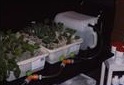
The roots (as well as the nutrient solution and medium) need to be contained in something, for example:
- You could use gravel, sand or perlite contained by bags, pots or tubs.
- You could use rockwool fibre or scoria contained in a raised bed built from timber, metal or concrete.
You may use polystyrene boxes, hanging baskets, prefabricated fibreglass tanks etc. the list of possibilities is endless.
Watering/Nutrient Application Equipment
Nutrient can be applied dry on the surface and then watered in or mixed with water and applied as a nutrient solution.
Solution may be applied automatically at predetermined times or as required.
It may be applied at the bottom of the media and allowed to move up via capillary action, or alternatively at the top and allowed to filter down.
It may be pumped on, or moved manually or by gravity.
Excess may be collected and reused, or allowed to be lost after passing through the media.
Trellising
This is not always necessary. When growing tall or creeping plants: (eg. tomatoes, cucumber, chrysanthemum, carnation, roses), the root medium alone may not be strong enough to support the plant. A trellis of wire mesh, strings or stakes may be necessary to just prevent the plants from falling over and being damaged.
Root Media
The media which the roots grow in affects your decisions about all of the above. You must consider rooting media with respect to its ability to hold water, air, nutrients, support the plant etc.
REFERENCE BOOKS
Buy these references from our bookshop, written by our staff.
If you enrol in Hydroponics I, these make great additional reading.
Even if you decide to not pursue the course, these books are unique references that will be an asset to anyone growing plants in hydroponics.
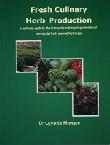 Fresh Culinary Herb Production - a Technical Guide to the Hydroponic and Organic Production of Commercial Fresh Gourmet Herb Crops 2 nd ed. by Lynn Morgan 130 pages, features full colour gloss throughout, perfect bound cover giving excellent presentation, with additional chapters on exciting new herb varieties and their cultivation using modern hydroponic greenhouse techniques.
EBOOK
Commercial Hydroponics by John Mason
This is one of the world's largest selling hydroponic books. Even if you are a serious amateur grower, this is one of the best books you will find. Contains information simply not found in other books! Click for details
WHY CHOOSE THIS COURSE?
This is the best starting point for most people wanting to study
hydroponics seriously - but do not want at this point to commit to a longer course of study. It will lay a foundation for business or
career involvement, but not so much of a that it locks you into
excessive time and financial commitments of a certificate or diploma.
As
a graduate of this course, you will understand most of the basics and certainly enough to pursue career
or business opportunities.
This course can be used as a credit in a certificate or diploma should you decide to go further.
Hydroponics I has the potential to greatly increase your
knowledge and understanding, enlightening you to the commercial and
amateur possibilities for using hydroponics to grow plants.